
Before signing a renovation contract, identify unresolved problems that could consume your available cash and price them individually. A contingency should cover documented uncertainty, not apply a default percentage to the whole house.
Key takeaways
- Separate known scope, allowances, exclusions, and unresolved risks before calculating contingency.
- Price each meaningful risk in dollars using local bids, trade input, or written alternates.
- Use house age as a reason to investigate, not as a formula for the reserve.
- Treat the resulting percentage as a reasonableness check, not the calculation itself.
- Specify who controls the reserve and who approves every draw in the contract.
A renovation contingency should reflect unresolved risks, not a default percentage
A useful contingency reflects the risks still unresolved when the agreement is signed. For a kitchen, bathroom, or addition, those risks may include concealed damage, incomplete drawings, permit uncertainty, restricted access, and gaps in the proposed contract.
- Price identifiable risks in dollars. List each possible condition, define what would trigger extra work, obtain local pricing, and record the basis for the amount.
- Do not calculate from house age alone. Age can identify areas worth examining, but maintenance, previous alterations, access, and observed conditions provide better direction.
- Define what the reserve covers. Keep known work, undecided products, exclusions, and concealed conditions off one vague line.
- Compare matching scopes. Before calculating a reserve, normalize contractor quotes before comparing prices.
Labor rates, permit requirements, adopted codes, site access, and contract terms vary by location. You still need current local bids, permit research, and project-specific contract review.
What does a 10% renovation contingency actually mean?
A 10% contingency describes arithmetic, not risk. Applied to a signed construction price of $100,000, 10% produces a $10,000 reserve. The calculation does not establish whether $10,000 is sufficient or whether it addresses the right problems.
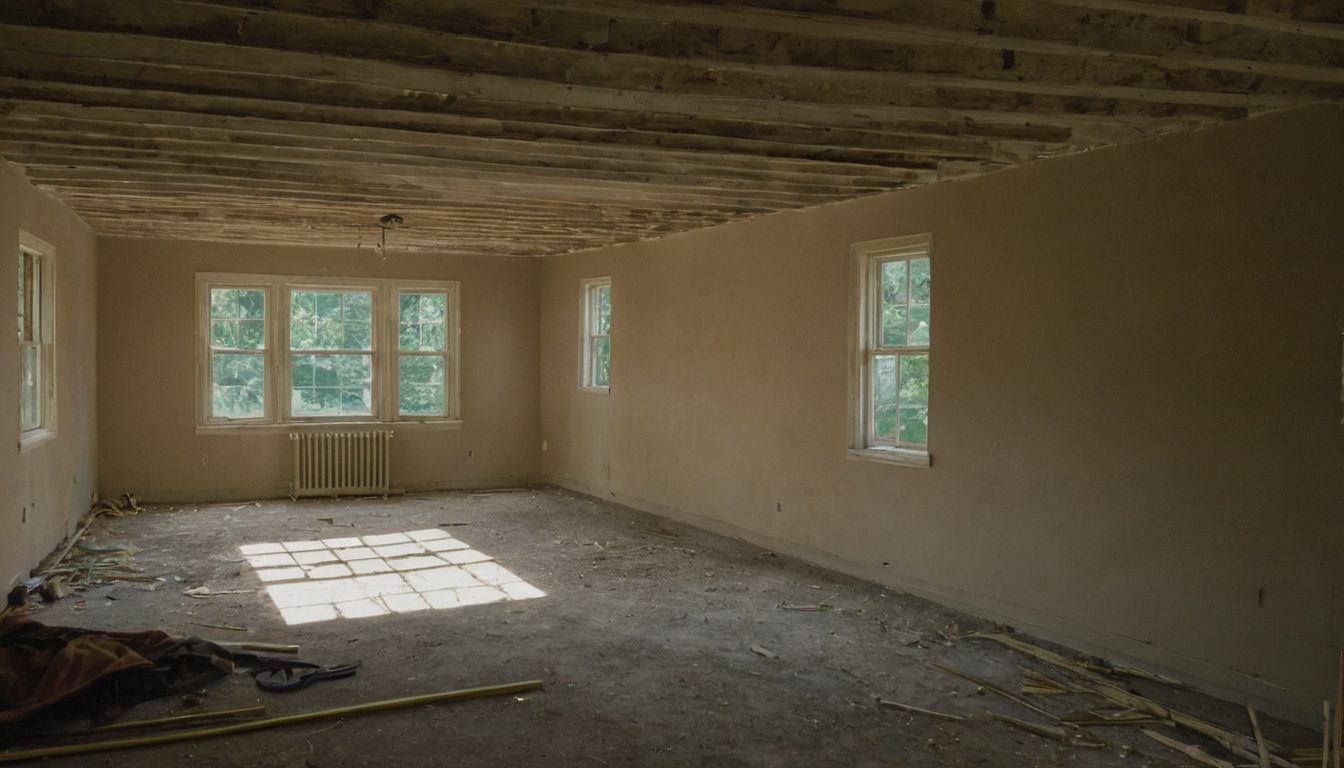
A renovation contingency should reflect unresolved risks, not a default percentage shown with practical context cues.
Write the calculation base beside the percentage. A signed construction price might include labor, specified materials, permits, disposal, overhead, and profit if the contract already includes those items. Avoid applying contingency to financing costs, movable furniture, optional upgrades, owner purchases outside the agreement, or duplicated allowances.
A construction contingency is a reserve, not automatically a contractor fee
An owner-held contingency is money the homeowner keeps available for approved uncertain work. Contractor overhead and profit compensate the contractor under the agreement. Allowances cover defined products that have not been selected completely. A contractor-controlled contingency account is a different arrangement and needs clear contract language.
Before signing, require the contract to identify who controls the reserve, what may trigger a draw, whether markup applies, and what happens to unused money. Start that review by putting known scope, allowances, exclusions, and true uncertainty on separate lines.
Known scope, allowances, exclusions, and true contingency belong in separate budget lines
Divide the estimate into defined work, product allowances, explicit exclusions, and genuinely unresolved conditions. An omitted disposal charge or a fixture allowance missing freight is different from deterioration discovered after demolition.
| Budget category | Definition | Example | Pricing responsibility | Action before signing |
|---|---|---|---|---|
| Known scope | Work described and priced in the contract | Demolition, protection, and disposal | Contractor | Confirm labor, materials, quantities, and cleanup |
| Allowance | Placeholder for an unselected product | Bathroom fixtures or kitchen tile | As stated in the contract | Confirm tax, freight, waste, labor, and markup |
| Exclusion | Work omitted from the price | Permit fees, painting, or utility relocation | Owner unless added to scope | Price or investigate it |
| Contingency | Reserve for a condition not yet confirmed | Concealed subfloor deterioration | Contract identifies who controls it | Set an approval process |
| Change order | Written revision to price, scope, or time | Added electrical work after discovery | As stated in the contract | Confirm authorization rules |
Allowances should cover selections, not hide incomplete scope
A useful allowance identifies the product category, quantity, expected quality level, and purchasing responsibility. A fixture allowance may cover a sink and faucet while omitting freight, tax, fittings, installation labor, or contractor markup. Put predictable omitted costs in the estimate rather than contingency.
Compare the allowance schedule with supplier quotes and ask the contractor to show the full installed cost. If a cabinet layout, appliance specification, or tile quantity is still missing, complete that work before treating the resulting price gap as uncertainty.
Exclusions should be priced or investigated before they consume the reserve
Review every exclusion before signing:
- Who pays for disposal, temporary protection, patching, painting, and final cleaning?
- Who obtains permits, and are design, engineering, testing, utility, and permit charges included?
- Who receives, stores, and inspects owner-supplied products?
- Does suspected hazardous material require assessment before disturbance?
The U.S. Environmental Protection Agency asbestos guidance states that appearance alone generally cannot confirm asbestos. EPA advises against disturbing suspect material in good condition. If planned renovations may disturb that material, EPA recommends assessment or sampling by a properly trained and accredited asbestos professional, subject to applicable state requirements.
Finish work may also require ventilation planning. The EPA identifies paints and building materials as common indoor VOC sources and recommends increased ventilation when products that emit volatile organic compounds are used indoors.
Known scope, allowances, exclusions, and true contingency belong in separate budget lines shown as an editorial planning reference.
Once predictable omissions are priced, the remaining list is much narrower: only unresolved risks deserve contingency dollars.
Which renovation risks deserve their own dollar reserve?
A risk deserves a separate reserve when an unresolved condition could change cost or sequence. Record the evidence, trigger, local cost consequence, responsible party, and next investigation rather than using one broad line for unforeseen conditions.
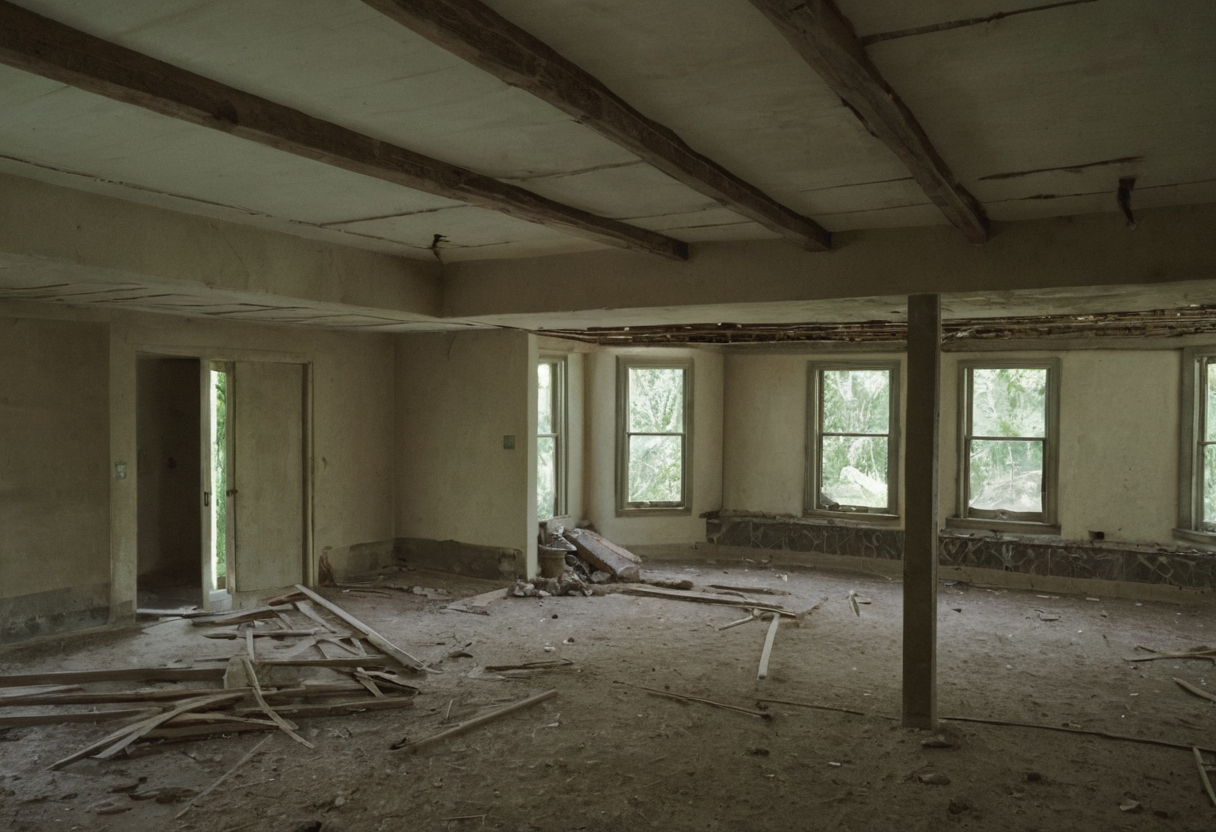
Which renovation risks deserve their own dollar reserve shown with practical context cues.
Concealed-condition risk rises when the proposed work opens wet areas, walls, floors, or foundations
A soft bathroom subfloor, staining below a window, or repeated drain repairs supports further investigation. Those observations do not prove concealed decay, failed wiring, deteriorated piping, or framing damage. Building age is a screening factor, so use condition and access evidence instead of age alone.
Home inspections have access limits, too. The American Society of Home Inspectors standard does not require an inspector to determine the condition of components that are not readily accessible.
| Unresolved risk | Available evidence | Trigger | Possible cost consequence | Schedule consequence | Next investigation |
|---|---|---|---|---|---|
| Moisture behind wet-area finishes | Staining, soft flooring, or an elevated reading | Damage confirmed after access | Local quote for source correction, drying, and repair | Drying and reinspection | Targeted access and moisture evaluation |
| Incomplete design | Missing dimensions, schedules, details, or products | A trade cannot price specified work | Selection difference, redesign, or replacement work | Submittal or procurement delay | Complete drawings and specifications |
| Permit or engineering revision | Unconfirmed local review path | Review requires added documents or work | Local design, engineering, filing, and construction quotes | Review and resubmittal | Written jurisdiction inquiry |
| Restricted access or disposal | Narrow stairs, occupied rooms, or no staging area | Planned equipment cannot reach the work | Extra handling or an alternative method | Slower demolition and delivery | Site logistics walk-through |
Moisture findings call for attention to both damaged material and the source. The EPA moisture and mold guide says moisture control is central to mold control, recommends drying wet or damp material within 24 to 48 hours where practical, and directs remediation toward both the moisture problem and affected material. That guidance does not determine the concealed condition or repair cost of a particular assembly.
Incomplete drawings and undecided products create pricing risk before construction starts
A priceable package identifies layouts, dimensions, finish extents, fixtures, appliances, structural details, and installation requirements. For a bathroom, verify the bathroom waterproofing scope before tile starts so defined waterproofing work does not consume contingency.
Permit and plan-review risk depends on the local jurisdiction and proposed work
Permit exposure cannot be copied from another city. California publishes its Building Standards Code as Title 24 in a triennial edition with intervening supplements. Title 24 contains separate administrative, building, residential, electrical, mechanical, plumbing, energy, fire, existing-building, and green-building parts. Only the provisions applicable to the project and enforcing jurisdiction control the work.
The California Building Standards Commission code page states that the 2025 edition became effective January 1, 2026. The applicable edition still depends on the permit date, project type, enforcing agency, transition rules, and valid local amendments. Ask the local building department which reviews apply before signing, then price the remaining risks.
How do you convert renovation risks into a contingency amount?
Price each unresolved risk as a documented dollar exposure, reduce that exposure through investigation, and add only the amounts that remain. Compare the result with the contract price afterward as a reasonableness check.
- List each unresolved condition separately, such as a soft subfloor, uncertain electrical capacity, or unknown wall framing.
- Define the event that would require extra work.
- Obtain lower and higher local prices from the contractor, relevant trade, supplier, or design professional.
- Reduce uncertainty through a limited opening, trade inspection, engineering review, completed selection, or alternate bid.
- Retain only the remaining exposure. A high figure is a plausible consequence, not an automatic addition.
- Total the retained amounts and record every assumption.
A worked renovation contingency should show every assumption
The following bathroom worksheet is hypothetical. Its rounded amounts show the calculation and are not current prices for any market.
| Unresolved item | Initial range | Investigation | Revised exposure | Retained reserve |
|---|---|---|---|---|
| Soft subfloor near tub | $1,000 to $4,000 | Limited access and carpenter review | Localized replacement appears likely | $1,500 |
| Drain relocation | $800 to $3,000 | Plumber confirms route and access | Route priced except for concealed obstruction | $1,000 |
| Ventilation upgrade | Unpriced | Electrical and mechanical review | Written alternate obtained | $1,200 |
The hypothetical retained reserve totals $3,700. Only then should the homeowner divide $3,700 by the signed construction price to see the resulting percentage. An unpriced risk needs further investigation or a written alternate, not a guessed probability.
How do you convert renovation risks into a contingency amount shown as an editorial planning reference.
Bathroom, kitchen, and addition contingencies should not use identical assumptions
Bathroom risks often involve waterproofing transitions, subfloor damage, plumbing layout, and ventilation. Kitchen risks may involve appliance specifications, electrical capacity, cabinet lead times, wall removal, and utility relocation. Addition risks may include zoning, soils, foundations, drainage, structural connections, energy requirements, and utility capacity.
Local bids, completed plans, site conditions, permit research, and licensed-trade review determine which risks belong on the worksheet. Once the reserve is calculated, the contract must say who controls it and how money can be released.
A renovation contract should state who controls the contingency and how change orders are approved
A renovation reserve needs a written control process. The contract should identify who holds the money, which events may use it, what documentation supports a charge, how markup and schedule changes are handled, and what happens to unused owner-held funds.
Every contingency draw should have a trigger, price, approval, and remaining balance
- Discovery: Record the condition before corrective work begins, except when immediate action is needed to protect people or property.
- Documentation: Provide photographs, field notes, revised drawings, or inspection comments.
- Pricing: Separate labor, materials, subcontractors, credits, markup, and schedule effects.
- Approval: Obtain written authorization as required by the contract and applicable law.
- Ledger update: Show the approved draw and remaining reserve.
Contract rights, deposit limits, cancellation periods, change-order rules, and emergency exceptions vary by state. Check the language with the applicable licensing or consumer-protection authority and obtain legal review if ownership or approval rights remain unclear.
Unused owner contingency should not become extra scope by default
An unspent owner-held reserve should not become automatic permission for upgrades. Release money only as project risks pass, then reconcile open changes, credits, punch-list work, and permit items at closeout. Often, the better first move is to reduce uncertainty before increasing the reserve.
Reduce renovation uncertainty before increasing the contingency
When one unresolved condition could materially change the project, targeted investigation is usually more useful than adding an arbitrary percentage.
When should a homeowner investigate instead of carrying a larger reserve?
- Low uncertainty: Confirm selections, access, disposal, and permit requirements.
- Moderate uncertainty: Obtain trade quotes, specialist review, or limited exploratory access where stains, soft flooring, recurring backups, altered wiring, or uncertain utility routes overlap the work.
- High uncertainty: Seek engineering or licensed-trade review where the project affects structure, foundations, service capacity, or assemblies showing movement or persistent moisture.
Match diagnostic work to the observed warning sign, planned demolition, access, and local professional requirements. Exploratory openings need owner permission and may require licensed trades, engineering oversight, hazardous-material controls, or permit approval. Investigation narrows uncertainty but cannot expose every concealed condition.
When is a larger renovation reserve still warranted after due diligence?
A larger project-specific reserve may remain appropriate for inaccessible assemblies, occupied construction, uncertain utility routes, phased permits, or products with unconfirmed availability. Move confirmed repairs into the base scope. Before signing, compare the documented reserve with available cash and the household’s ability to pause work, then revise the scope, allowances, exclusions, and risk register until every dollar has a stated purpose.
Frequently asked questions
What is a good construction contingency percentage for a home renovation?
No single percentage fits every renovation. Price the unresolved risks first, total the retained exposures, and use the resulting percentage only to check the calculation.
What does a 10% contingency mean in a renovation estimate?
It means 10% of a stated calculation base. The estimate should identify that base and explain which risks the reserve is intended to cover.
Should contingency be calculated on the contractor’s price or the total project budget?
Calculate risk in dollars rather than choosing either base automatically. If a percentage is shown, state whether the denominator is the signed construction price, remaining construction scope, or another clearly defined amount.
Is a renovation contingency the same as an allowance or contractor fee?
No. Contingency covers unresolved risk, an allowance covers a defined but incompletely selected item, and a contractor fee compensates the contractor under the agreement.
Who keeps unused contingency money when the renovation is complete?
The answer depends on who funded and controls the reserve, the signed contract, and applicable law. An owner-held reserve normally remains outside the contract until approved, but the agreement should state the treatment of unused funds explicitly.