
A ceiling stain appears in an occupied house after heavy rain. Should the homeowner approve a token patch that may miss the entry point, or replace a roof that may still be serviceable? The lower-risk decision requires five findings to align: leak location, deck condition, material serviceability, repair history, and local reroofing rules.
When are localized roof repairs technically defensible?
Localized roof repairs are defensible when one entry point is isolated, nearby decking remains sound, compatible materials can be worked safely, and the surrounding roof remains serviceable. Replacement becomes lower risk when leakage, deterioration, or previous patches extend across multiple areas.
- Leak distribution: One verified defect supports repair; recurring leaks on multiple slopes support replacement.
- Deck condition: Sound, dry decking supports repair; widespread softness, decay, or delamination expands the scope.
- Material condition: Flexible, compatible roofing supports repair; brittle or discontinued material weakens it.
- Repair history: No nearby recurrence supports repair; repeated patches indicate a broader failure pattern.
- Flashing: One accessible defect may be repaired; widespread failed integration may require removal.
- Remaining serviceability: A functional surrounding field supports repair; distributed failures support replacement.
A roof repair decision should combine location, condition, and recurrence
Roof age is an input, not an automatic replacement threshold. A repair remains credible when roofers can remove and replace a limited area without damaging adjacent roofing. Roof system, weather exposure, adopted code, and manufacturer instructions affect that judgment.
Active water entry requires stabilization before the final roofing scope is chosen
A roofing contractor may install a secured tarp or temporary, material-compatible protection where conditions permit. Inside, protect finishes and photograph staining without touching wet wiring or supporting sagging materials. Water near electrical equipment requires an electrician, while visible framing movement requires qualified structural evaluation.
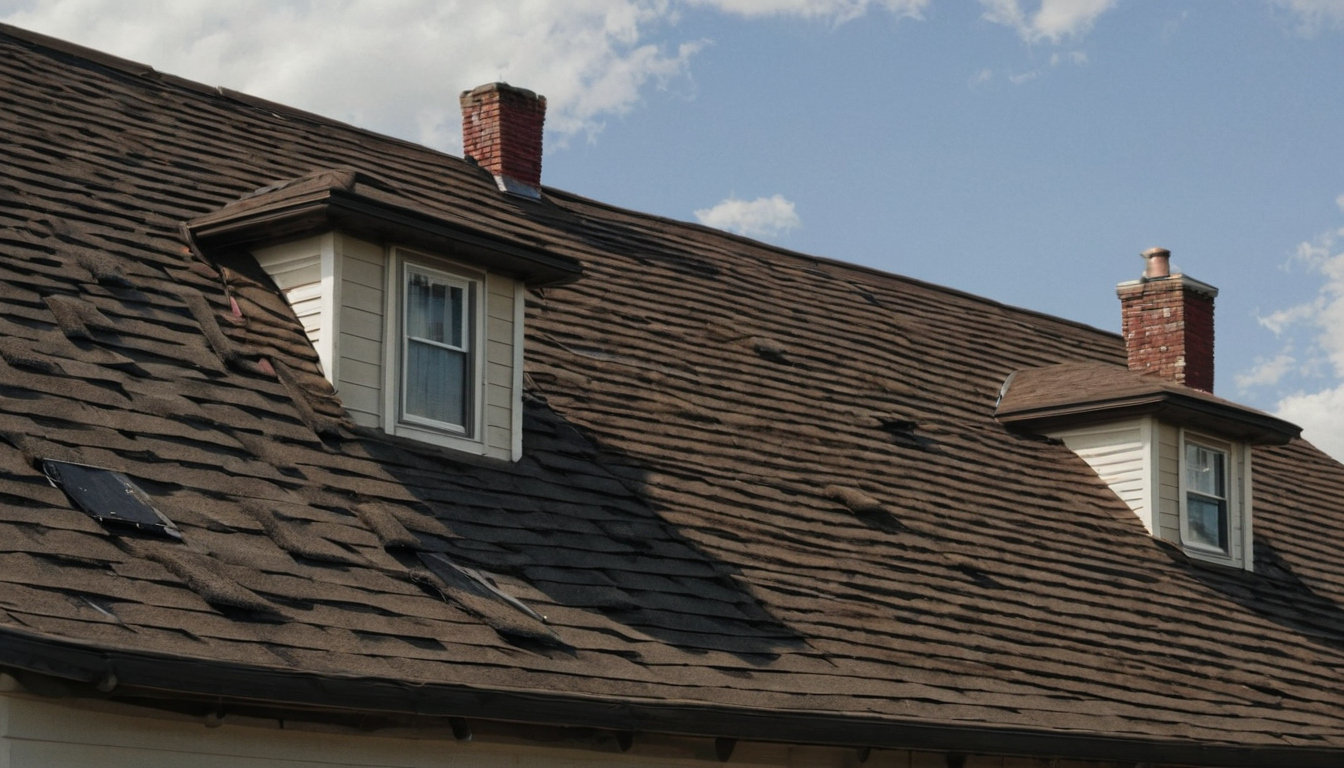
When are localized roof repairs technically defensible shown with practical context cues.
Homeowners should inspect from inside, the attic, and ground level rather than walking a wet, steep, icy, brittle, or storm-damaged roof. Once the house is stable, the actual pathway must be traced.
Leak location must be traced before roof repairs are priced
A ceiling stain does not reliably identify the roof defect above it. Water can follow underlayment, deck joints, rafters, fasteners, and penetrations before appearing indoors. The diagnosis must connect the stain to an exterior pathway while ruling out plumbing and condensation.
The interior stain and the exterior defect may be in different roof locations
The homeowner should request labeled photographs or a field sketch connecting the room, attic framing, roof slope, penetrations, and exterior coordinates. The record should identify the weather or equipment conditions that produce the symptom.
- Record the weather history, stain shape, dampness, and timing.
- Inspect the attic for wet framing, fastener tracks, plumbing, ducts, and water paths.
- Map the roof plane and inspect valleys, walls, chimneys, skylights, vents, fasteners, and old patches.
- Use controlled hose testing only when a qualified roofer can isolate small areas. Infrared images and moisture meters identify suspect patterns but require physical confirmation.
Attic condensation can imitate an exterior roof leak
Condensation may appear as widespread frost, damp sheathing, or droplets on nails rather than one concentrated rain path. Inspect exhaust ducts, HVAC components, attic bypasses, and blocked ventilation paths. The U.S. Environmental Protection Agency moisture guide advises correcting condensation and damp areas promptly.
If investigation disturbs painted finishes, sealants, or building materials, the EPA identifies such products and materials as possible indoor sources of volatile organic compounds and recommends increased ventilation during use of emitting products in its indoor air quality guidance. With the pathway identified, deck integrity becomes the next test.
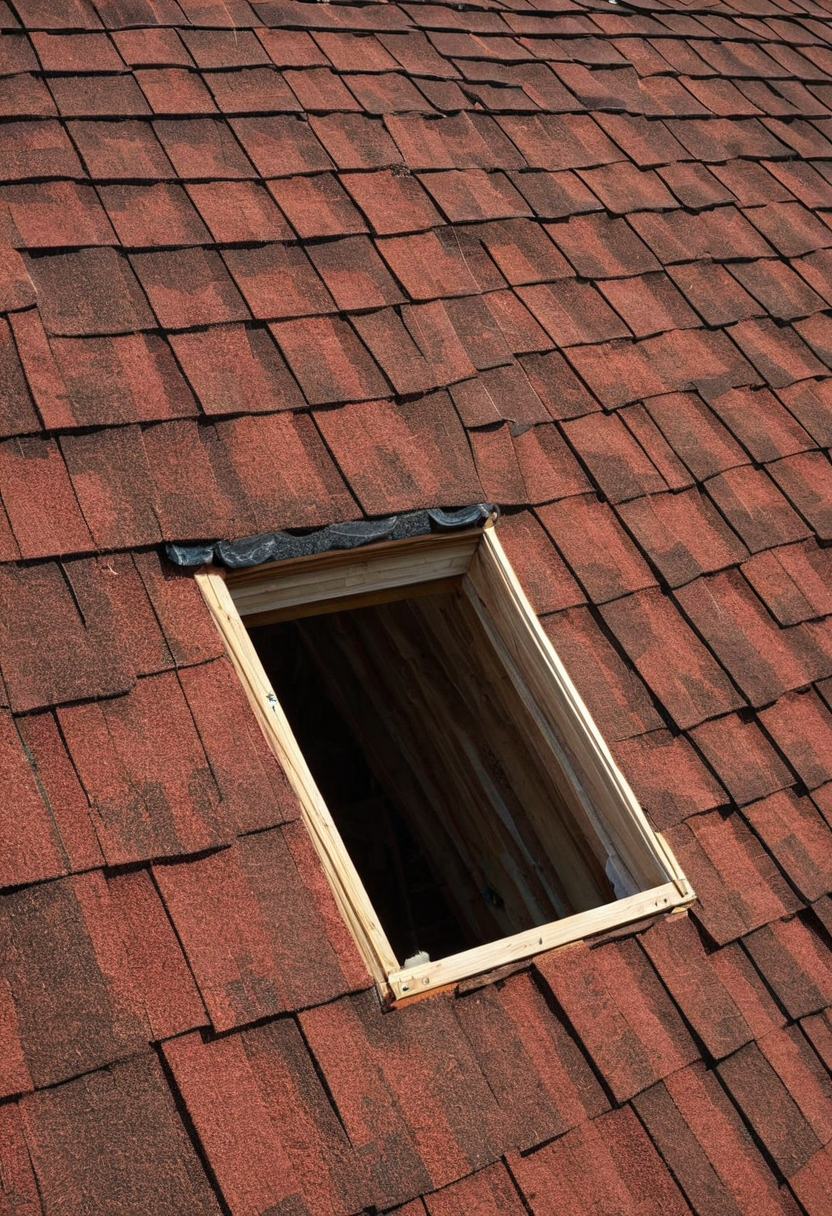
Leak location must be traced before roof repairs are priced shown as an editorial planning reference.
Roof-deck condition can turn a small leak into a larger replacement scope
Localized repair remains practical only when the deck can hold fasteners and provide a stable substrate. Soft, swollen, delaminated, decayed, or structurally damaged sheathing must be exposed and corrected.
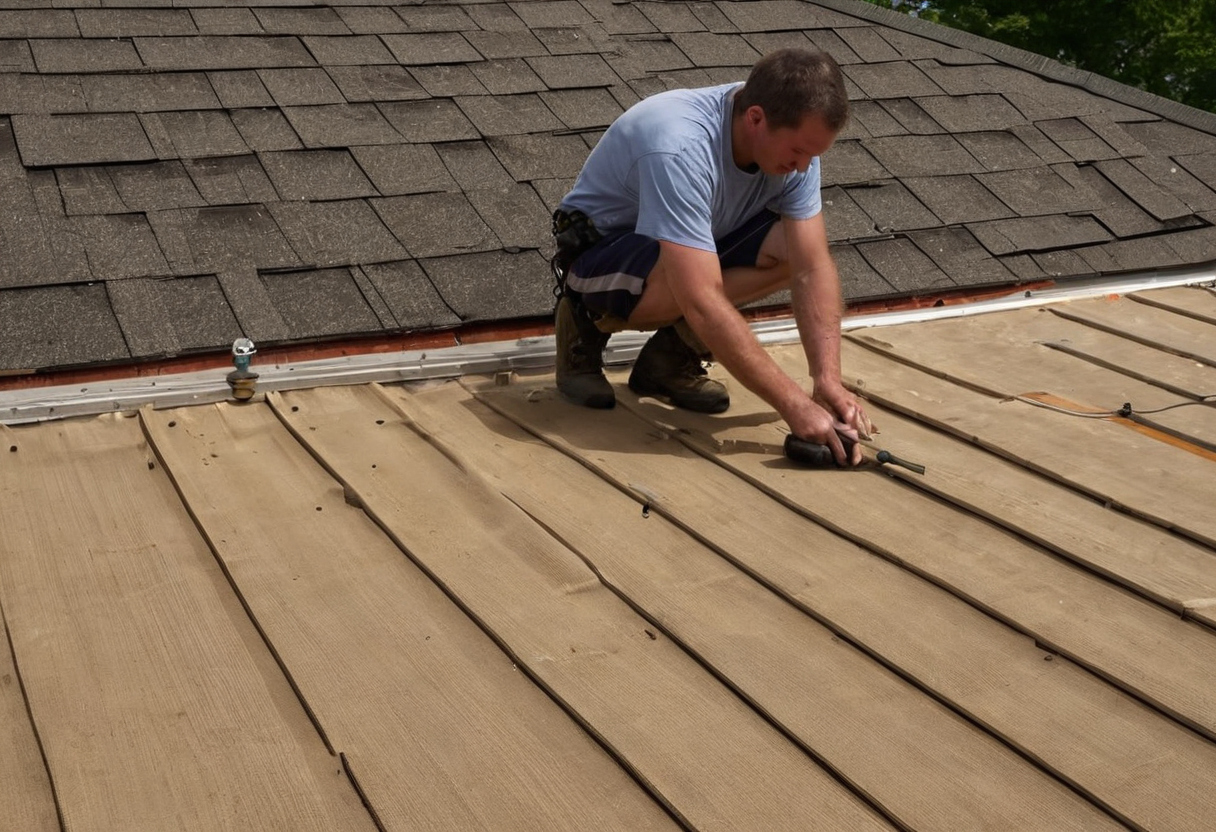
Roof-deck condition can turn a small leak into a larger replacement scope shown with practical context cues.
Roof decking must be evaluated by condition, not staining alone
An attic inspection should distinguish an old stain from active moisture, biological growth, lost sheathing integrity, or framing damage. Relevant observations include:
- Active droplets, damp sheathing, growth, or corroded fasteners
- Sagging, plywood delamination, swollen oriented strand board, or separated planks
- Daylight at unintended openings or cracked and displaced framing
Before specifying replacement panels, the roofing contractor should identify deck type, thickness, span, attachment, and local requirements. Sagging framing, altered trusses, or uncertain load capacity requires qualified design review.
Hidden deck damage should be handled with a written unit-price allowance
The contract should price concealed deck replacement per sheet or square foot, require photographs and approval, and state whether labor, fasteners, disposal, framing work, and inspection delays are included. Once the deck passes, material serviceability determines how much value roof age provides.
Roof age matters only when it is combined with material serviceability
An installation date cannot determine scope by itself. Material type, exposure, installation quality, maintenance, storm history, and the ability to move adjacent pieces without breaking them determine whether repair remains defensible.
A ten-year-old roof is not automatically old or repairable
Chronological age differs from apparent age and remaining serviceability. Asphalt shingles may crack or lose granules; metal may corrode; tile, slate, and wood units may break or lose attachment. Permits, invoices, warranties, prior-owner records, and dated imagery can help establish installation timing, but observed condition still controls.
A repair is weak when surrounding roofing materials cannot be lifted or matched safely
A repair loses credibility when adjacent shingles crack during lifting, interlocking units cannot be removed intact, metal seams cannot be reopened, or replacement components are incompatible. Manufacturer instructions should govern fastening, sealants, flashing, accessories, and warranty effects. Cosmetic similarity does not establish functional compatibility.
Even serviceable material must pass local permit and reroofing requirements.
Local codes, permits, and reroofing rules can override a preferred repair scope
Roof repair thresholds are jurisdiction-specific. Adopted codes, amendments, permit policies, existing layers, deck condition, and local hazards may alter the permitted scope.
The roofing “25% rule” is not a universal national requirement
A percentage threshold may come from a local amendment, emergency order, insurance provision, or outdated rule. Ask for the jurisdiction, code edition, effective date, building type, and primary government source.
The Los Angeles Department of Building and Safety, for example, requires permits for listed alterations and plan approval before permitting structural alterations within its jurisdiction. This is a local example, not a national roof threshold.
In Pennsylvania municipalities that have opted out of Uniform Construction Code enforcement, the Pennsylvania Department of Labor and Industry approves commercial construction under its stated jurisdiction, excluding qualifying one- or two-family dwellings three stories or less from that definition. The department also has sole jurisdiction over state-owned buildings and performs applicable plan review, permitting, and inspections.
Overlays, damaged decking, flashing, and underlayment require separate compliance checks
Permission to overlay does not establish that every component may remain. Decking, underlayment, attachment, and flashing at walls, valleys, chimneys, skylights, and penetrations require separate checks. Roofing contractors can price comparable work only after these constraints are documented.
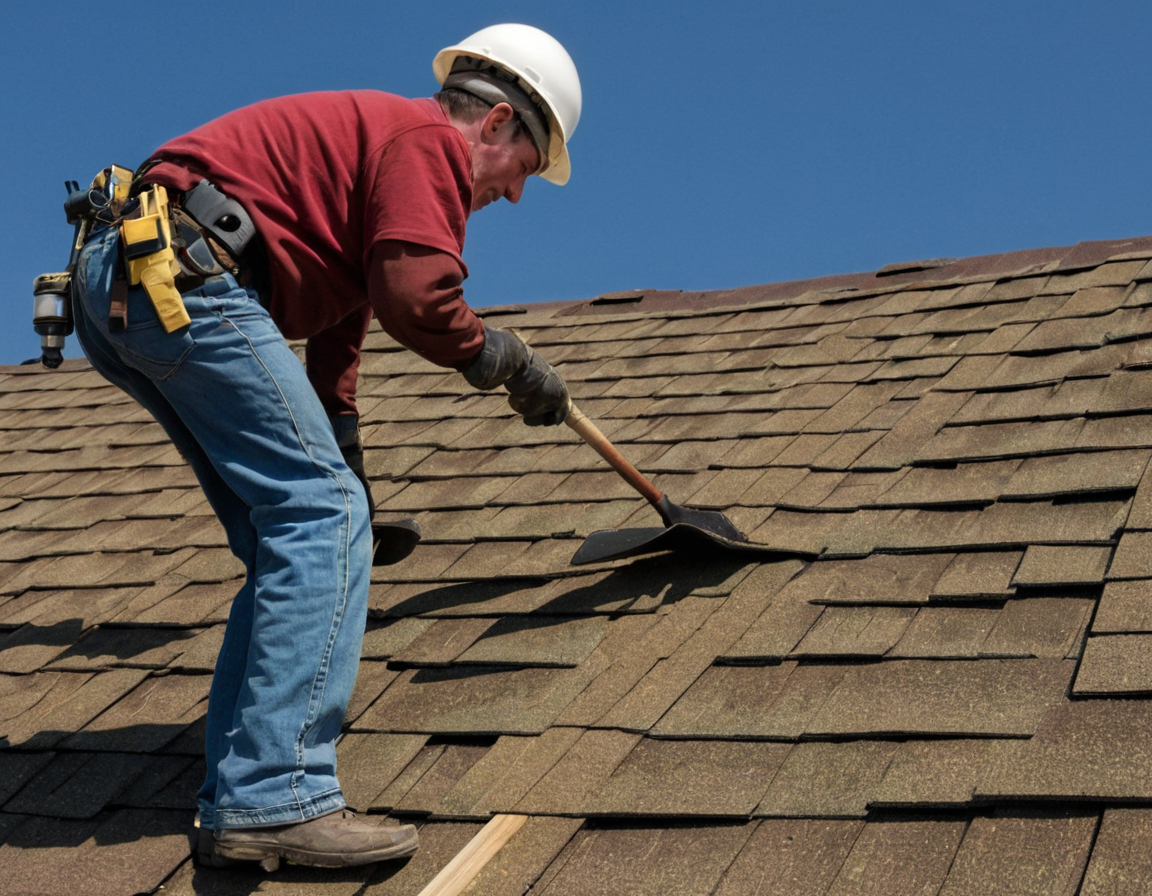
Local codes, permits, and reroofing rules can override a preferred repair scope shown as an editorial planning reference.
Roofing contractors should price the same documented diagnosis before bids are compared
Homeowners should ask roofers to price a defined diagnosis rather than compare an isolated patch with an unrelated replacement. Each estimate should identify the entry point, investigation limits, deck assumptions, compatible materials, flashing, permits, weather protection, exclusions, and warranty terms.
A defensible roof-repair proposal must state what finding would expand the scope
Expansion triggers may include unsound decking, wet insulation, corroded metal, failed adjacent flashing, or roofing too brittle to lift safely. The contract should require the contractor to stop, photograph the concealed condition, price the change, and obtain written approval.
- Price diagnostic opening, localized repair, expanded repair, and replacement separately.
- State removal limits and unit costs for decking, underlayment, flashing, disposal, and access.
- Confirm permit responsibility, change-order authority, insurance, and warranty effects.
Repair and replacement bids must be normalized before lifecycle risk is compared
Compare roof area, tear-off, deck allowances, accessories, permits, warranties, and exclusions. Homeowners can normalize roofing contractor bids with different scope assumptions, then require completion photographs of decking, flashing, fastening, cleanup, and inspection. Approve work only when the diagnosis and written scope align.
Frequently asked questions
Is a ten-year-old roof considered old enough to replace, or can it still be repaired?
A ten-year-old roof may remain repairable. The controlling findings are material condition, deck integrity, compatibility, leak distribution, and recurrence rather than age alone.
What signs show that a roof needs replacement instead of localized roof repairs?
Distributed leaks, widespread deck deterioration, brittle materials, repeated patches, failed flashing integration, and incompatible replacement components support broader replacement.