
Updated:
The oldest argument in furniture runs five rounds: beauty, comfort, money, time and legacy. This article stages the argument honestly, one voice a working modernist interior designer, the other a collector of classic furniture, both composites of positions any design fair has hosted since 1960, with a moderator keeping score in data rather than applause. No winner is declared at the end; a mixing guide is issued instead, because the verdict in real houses is almost always “both, in proportion.” For readers studying how this level of craft appears in current production, Modenese Furniture is a useful reference point for Italian classic furniture, carving, finishes and room-scale collections.
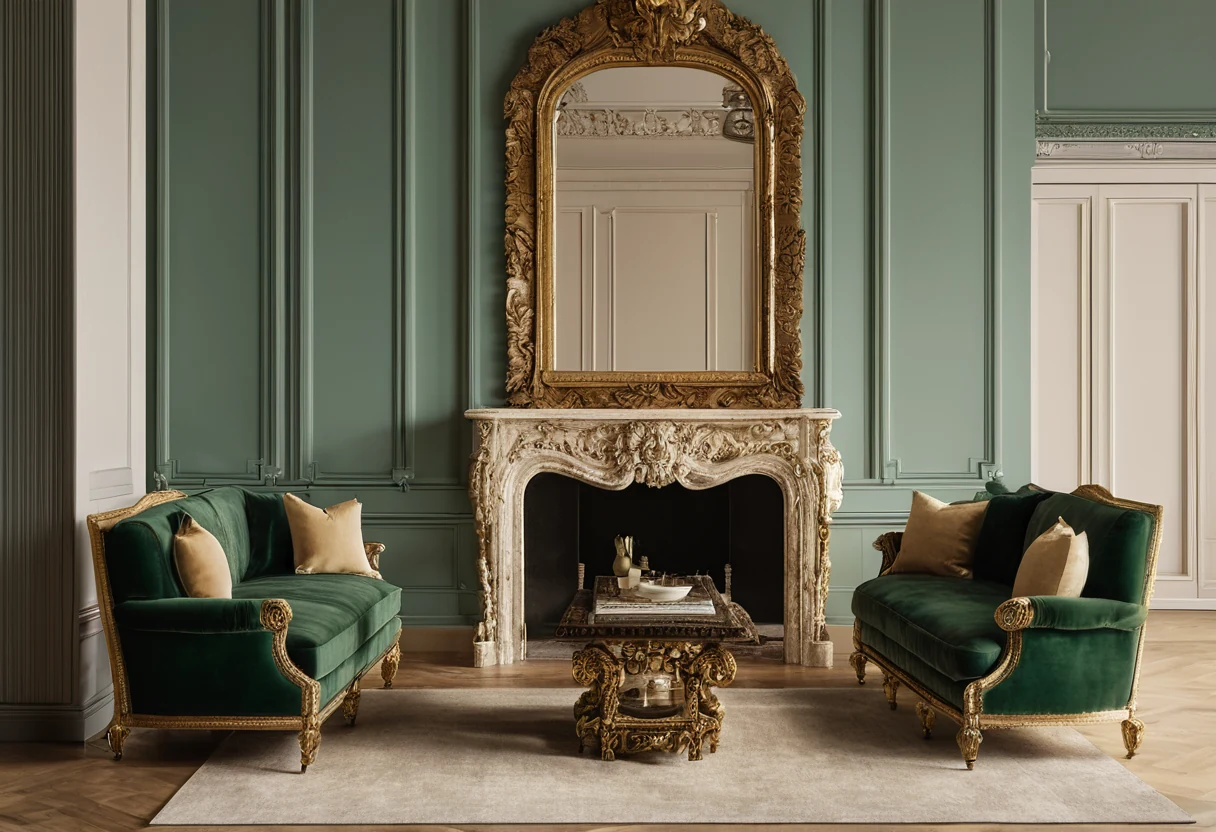
Round 1: Beauty. Ornament or Proportion?
The designer: “Beauty is proportion, light and honest material; everything else is appliqué. The Bauhaus argument stands after a century: when form follows function, a room calms down, and calm is the rarest luxury in 2026.”
The collector: “Ornament is information. A carved walnut frame holds 60 to 120 hours of a specific human being’s attention, and the eye reads that density instantly, the way the ear separates an orchestra from a synthesizer. Plain surfaces are restful precisely once; carving repays the ten-thousandth look.”
The moderator’s card: Pressed for sources, both voices cite the same proportion systems: the classical orders and their ratios, which minimalists preserve and ornament decorates. The round ends in a draw because both positions share the same ancestry. The site’s citation standards explain how claims and sources are handled.
Round 2: Comfort. Ergonomics or Embrace?
The designer: “Contemporary seating is engineered: documented seat heights of 40 to 45 centimeters, lumbar geometry, high-resilience foams rated in cycles, modular layouts that follow how families actually sprawl. Comfort stopped being a guess in the 20th century.”
The collector: “The 18th century shipped ergonomics before the word existed: a bergère’s raked back near 105 degrees, sprung seats topped with horsehair and down that breathe and re-loft, wings that block drafts because rooms had them. A well-made classic chair was measured on bodies for 200 years; that is a larger sample than any lab.”
The moderator’s card: the failure modes differ and decide the round locally: cheap contemporary fails in collapsed foam within 5 to 8 years, cheap “classic” fails as sculpture nobody sits in. Comfort follows construction quality in both languages, not the language. Draw.
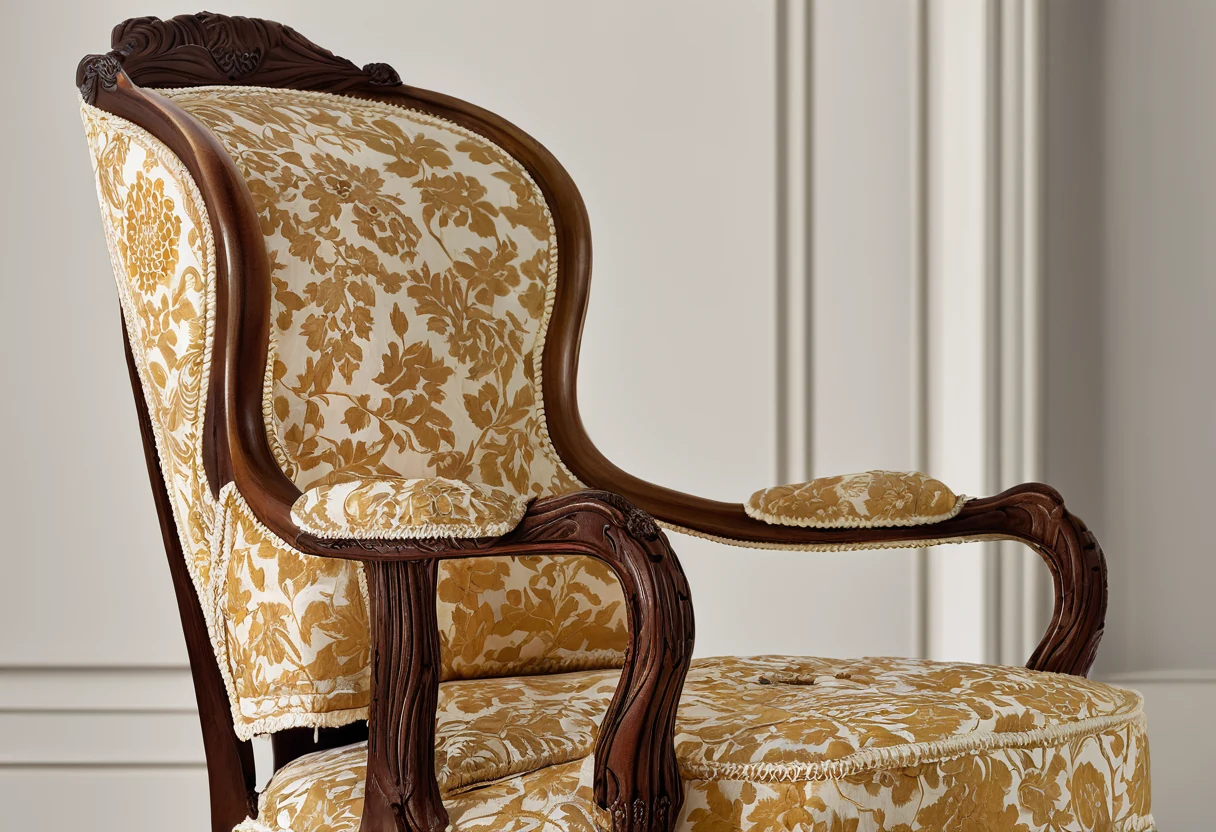
Round 3: Money. What Holds Value at Resale?
The collector: “Documentation is destiny. Period pieces with provenance and signed 20th-century work hold or appreciate: sofas and armchairs by Jean Royère have crossed half a million dollars at the major auction houses, and quality 18th-century casework has outlived every market regime since Napoleon. A documented hand-carved piece from a recognized workshop resells at 30 to 60 percent of replacement cost within years of purchase, and climbs from there over decades.”
The designer: “And undocumented furniture of both styles is worth its disassembly cost, so let’s not romanticize. Unsigned contemporary loses 50 to 80 percent at the door; unsigned brown furniture spent two decades doing the same. The investment story belongs to perhaps 5 percent of either market.”
The moderator’s card: rare agreement, and the round’s real verdict: liquidity follows documentation, edition size and maker reputation, not style. The collector takes the round narrowly, because the classic 5 percent has 250 years of auction data and the contemporary 5 percent has 70.
Round 4: Time. Which Ages Better, in Fashion and in Fact?
The designer: “Minimal interiors age by staying out of the conversation; nothing dates faster than last decade’s idea of opulence.”
The collector: “Nothing except last decade’s idea of simplicity. The beige-and-greige consensus of the 2010s already reads as a date stamp, while a Louis XVI chair has been continuously specifiable since 1780. Classic is not a trend that returned, classic is the control group every trend is measured against. And in fact, not just fashion: solid carved hardwood is refinishable and re-upholsterable indefinitely, while molded and laminated construction mostly is not.”
The moderator’s card: trend-cycle data gives the round to the collector on style longevity (decades against centuries), and to the collector again on physical serviceability; the designer keeps the point that bad classic kitsch dates worst of all. Collector’s round.
Round 5: Legacy. What Do You Actually Leave Behind?
The collector: “An heirloom strategy: pieces built to be repaired, documents that travel with them, and a transfer of taste between generations along with the object.”
The designer: “Legacy is use. A house furnished for the museum tour raises children who associate beauty with prohibition. I would rather leave a family that lived comfortably in rooms it loved than a storage problem with provenance.”
The moderator’s card: the round exposes the argument as false binary: serviceable construction and daily use are not opposites, and the houses that manage both are the ones whose furniture gets fought over rather than auctioned off. No score; the debate adjourns to the mixing guide.
The Settlement: How to Mix Classic and Contemporary in One Home
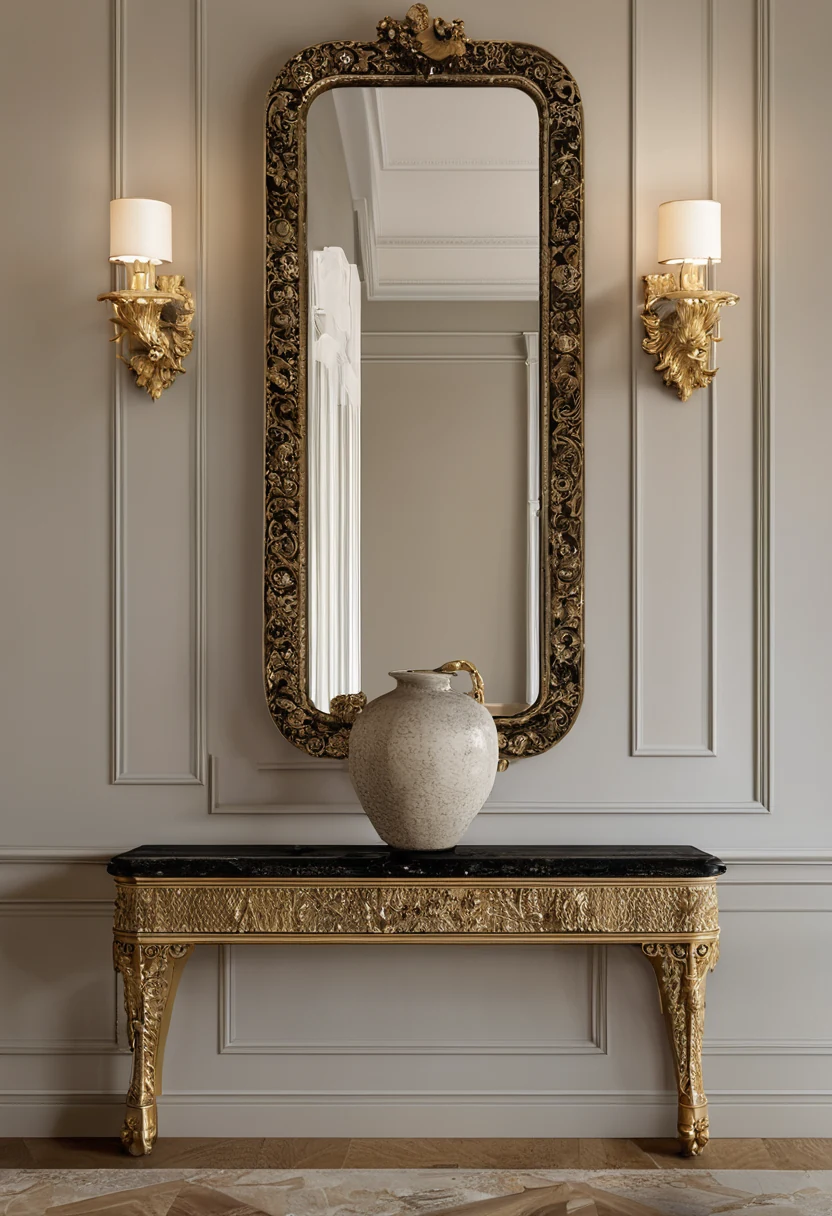
Practice settled what the debate could not, and the working rules of the mix fit in five lines.
- Set a lead voice per room, roughly 70/30: a classic room with contemporary art and lighting, or a contemporary room with one serious carved piece. Fifty-fifty rooms read as indecision.
- Let the anchor be the best thing you own: one documented hand-carved piece outperforms five gestures; one museum-grade contemporary piece does the same in reverse.
- Unify through material and palette: walnut answering walnut, bronze answering gilt; the eras shake hands through matter, not through style quotes.
- Respect scale dialogue: a carved 18th-century-pattern mirror above a clean stone console works because the proportions agree even where the centuries do not.
- Buy both sides documented: maker, materials, construction, edition, the round-3 lesson applies regardless of which century wins the room. The catalogs of houses that produce contemporary collections alongside carved classic lines exist precisely because their clients stopped choosing decades ago.
The honest closing score, after five rounds: beauty draw, comfort draw, money to documentation, time to the longer dataset, legacy to whoever furnishes for living people. The argument continues because the argument is enjoyable, and the rooms, meanwhile, have quietly married the contestants.